
By Alex Ingram
The history of women judges in Forsyth County, North Carolina, reflects a broader narrative of progress and representation within the state’s judiciary. While specific records of the earliest female judges in Forsyth County are limited, notable figures have emerged over the years, contributing significantly to the county’s legal landscape.
Annie Brown Kennedy: A Trailblazer in Law and Politics
Annie Brown Kennedy stands out as a pioneering figure in Forsyth County’s legal history. After earning her Juris Doctor from Howard University School of Law in 1951, she moved to Winston-Salem in 1953, becoming the second Black woman in North Carolina, and the second woman in Forsyth County, to practice law. Her legal career was marked by advocacy for civil rights and active participation in the Democratic Party. In 1979, Governor Jim Hunt appointed her to the North Carolina House of Representatives, making her the first Black woman to serve in the state’s General Assembly. She continued to represent Forsyth County until 1994, focusing on issues such as family welfare and women’s rights.
Judge Denise Hartsfield: Championing Juvenile Justice
Judge Denise Hartsfield’s career further exemplifies the strides made by women in Forsyth County’s judiciary. Elected in 2002 as the county’s second Black female District Court judge, she served until her retirement in 2021. During her tenure, Judge Hartsfield was instrumental in establishing the Forsyth County School-Justice Partnership, an initiative aimed at providing alternatives to the court system for juvenile misbehavior, reflecting her dedication to restorative justice practices.
Collective Progress and Continuing Representation
The advancements in Forsyth County mirror the broader progress within North Carolina’s judiciary. Statewide, women have broken significant barriers, such as Judge Elreta Alexander in 1968, who became the first Black woman in the country elected to the district court bench, and Chief Justice Susie Sharp, who, in 1974, became the first woman elected as Chief Justice of the North Carolina Supreme Court
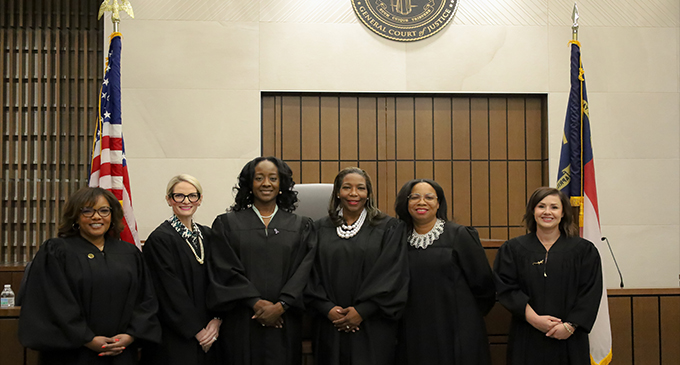
As of recent years, women continue to play pivotal roles in Forsyth County’s legal system, serving as judges, attorneys and legal advocates, thereby enriching the county’s commitment to justice and equality. Today, of the 11 district court judges in Forsyth County, six (more than half) of them are women.
The journey of women judges in Forsyth County reflects a broader societal shift toward inclusivity and representation, marking significant milestones in the pursuit of a more equitable legal system.
This article was drafted by Alex Ingram, The Chronicle’s AI reporter.