
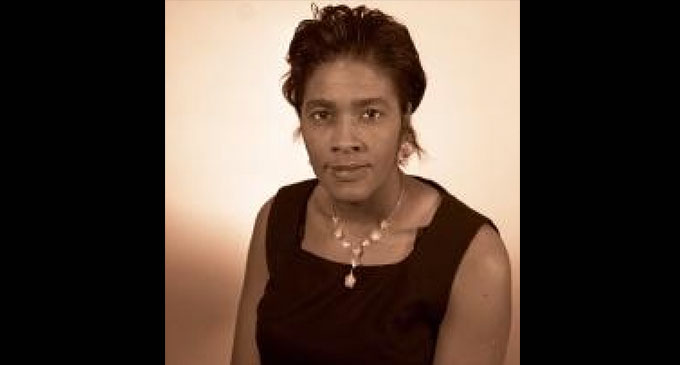
The life’s work of Dr. Jacquelyne Johnson Jackson: Advocating for minorities and aging
By David Winship
“Golden Years: How Americans Invented and Reinvented Old Age,” written by James Chappel and published in 2024, chronicles the twentieth century changes in demographics and political strategies as the aging demographic moves into retirement. Along with personal attitudes that developed in our up-to-this-point expansion of our living age, Chappel chronicles the changes in support that have developed for those who have passed the 50-year mark in life, both individually and in American society.
The chapter titled, “Black Power, Black Aging,” illuminates the life and work of Dr. Jacquelyne Johnson Jackson.
Nurtured in the Black bosom of Tuskegee, Alabama, Jacquelyne Johnson Jackson became an academic and advocate for the recognition of the rights for minorities aging, particularly those who suffered quadruple jeopardy – old, Black, female and poor.
From Winston-Salem to Tuskegee to Duke
Born in Winston-Salem in 1932, her parents, James and Beulah Johnson, both teachers who likely met at Winston-Salem State Teachers College, moved with Jacquelyne and her twin sister Jeanne Naomi to Tuskegee, where her mother taught in public school and her father became the chief of Educational Therapy at the Veterans Administration (VA), which was the only VA available to Black veterans.
Jacquelyne Johnson left home at 18 to pursue her academic career, first studying at Hampton Institute, taking her undergraduate and graduate degrees at University of Wisconsin – Madison. During her field work for her doctoral studies at Ohio State University (OSU), she returned to Tuskegee and Macon County, Alabama, where she studied the civil rights activities of three citizens’ organizations involved in the freedom movement in Tuskegee, Birmingham, and Montgomery. She received her doctorate in sociology, the first Black woman to do so, at OSU. During this research, which became her first book, “These Rights They Seek,” she experienced an encounter which changed the trajectory of her life and directed her professional work.
During her work in Tuskegee, she observed a couple who had to sell everything they owned, including their house, to pay their medical debts. She saw the devastating effects that aging without adequate social support had on the older population in her home county. This spurred her life’s work of studying aging in the minority population, leading to her advocacy for the needs of the aging population. Her research and advocacy helped lead to the creation of Medicare and Medicaid in the 1960s.
Dr. Jacquelyne Johnson Jackson was a nationally recognized gerontologist in the years from the 1960s to 1990s. She studied the unique factors affecting minorities in aging in America, addressing both genders of African Americans, Native Americans, Hispanic Americans, Asian Americans and white women. Her studies led to her publishing her seminal textbook in 1980, “Minorities and Aging,” the first book to address this subject. Dr. Johnson returned to Macon County, Alabama, in 1975 to film a documentary, “Old, Black, and Alive,” showcasing the lives of elder Black residents of that community, both female and male, highlighting their resiliency.
Dr. Jackson was assistant professor of medical sociology in the Department of Psychiatry at Duke University Medical School, achieving tenure in 1977, the first Black woman to attain tenure at Duke University and the second Black professor to be granted tenure. She served as professor at Duke until1998, when she retired with Emeritus status.
Aging in America not the “Golden Years” for Everyone
Dr. Jackson’s research was the first of its kind and the textbook was used in sociology preparation programs. With research in hand, Dr. Jackson advocated for support services for the aged in the ways that Social Security provided for the largely white workers who had maintained higher incomes than minority workers and therefore received higher benefits. Dr. Jackson’s research pointed to the disparity between retirement support for the aging lifestyles between white and minority older citizens. This condition has not changed since she did her research. As noted in “Golden Years,” the retirement gap between white and minority older adults in the population is wide and getting wider.
“Golden Years” describes an America that is aging. We are living longer than any of us ever expected. Improved medical care has contributed to this longevity. Privately funded and governmentally provided Medicare, Medicare, and the Affordable Care Act (ACA), also known as ObamaCare, have helped, though short of universal health care – the United States being the only industrialized nation to fail in this. Social Security has provided some financial support determined by lifelong earnings. This benefits those with wages and salaries, primarily upper-class white men, those who controlled political decisions and power. The remaining lower classes have been expanding as the middle class has been shrinking, yet the provisions for their benefit have been static and shrinking.
Another area of Dr. Jackson’s research concerned the healthcare received by minorities. Showing that little has changed, in a 2023 report from Black Healthcare Today, Black people received worse care than white people for 52% of quality measurements and better care for 11% of quality measurements. Similar disparities occurred for other minorities surveyed by Dr. Jackson decades before.
The retirement situation for aging Blacks has not changed in the 45 years since Dr. Jackson’s pioneering study. Stacy Brown, senior national correspondent for the Black Press USA, in a recent article in The Chronicle, cited a 2025 Retirement Confidence Survey from the Employee Benefits Research Institute. Researchers Craig Copeland and Lisa Greenwald found, “Black Americans reported disproportionately lower financial resources, and how they feel about retirement and financial security is clearly impacted by having less resources. In particular, Black retirees are struggling with higher likelihoods of their retirement lifestyle being worse than expected and having to retire earlier than planned because of a health problem or disability.”
Dr. Jackson was mentor and friend to Dr. Althea Taylor Jones of Kernersville, who served as associate professor and Gerontology Program administrator at Winston-Salem State University during her professional career. Dr. Taylor Jones commented that Dr. Jackson was “ahead of her time in so many ways” in her research and advocacy as a “forward thinker.”
“Dr. Jackson tried to move things from where they were toward where they needed to be,” said Taylor Jones, “by confronting people and having them face what they were denying. One area that Dr. Jackson emphasized was the difference between gerontology and geriatrics, between the sociology of aging and the medical aspect of aging.”
Dr. Jackson was a fighter, refusing to take “no” for an answer, and Dr. Taylor Jones carries forward this same attitude. She commented that, “Unfortunately, we are going backwards” in our attention to the needs and possibilities of our aging population, the fastest growing segment of our demographics. “There are so many in denial and not facing reality.”
The Changing Focus of AARP and Lack of Priority for Black Elders
As mentioned in “Golden Years,” AARP (originally called the American Association of Retired Persons) became the “go to” organization for education, advocacy and support for older people after 1975. As an organization, it enrolled 38 million members in 2025. As an advocacy organization, its chapters, publications and member benefits through marketing collaborations have served the demographic segment of people over 50 in ways that promote an active, healthy and wealthy lifestyle and aging possibilities for the upper echelon of American society. Its promotional tools and efforts are aimed toward those who benefit from savings and retirement accounts, those who embrace joyous aging. Not as frequently addressed are the supports needed for those who are older and poor, minority and disabled, as well as any combination of these factors.
AARP is battling a societal attitude, “ageism,” a misperception of older people – their abilities, their needs and their desires. Ageism comes in various guises. Older people have been discriminated against in public services – when services are available – while younger people have received the attention of preventable health, mental health, and legal services.
AARP shifted from politics of security, which many still need, to politics of anti-discrimination – or politics of recognition – modeled on the campaigns for civil rights, women’s rights, and gay rights. which affects some but ignores the majority of those who live without resources or power. “The challenges faced by the most disenfranchised older people were [and are] different, seldom explored through the lens of ageism and seldom prioritized by AARP,” commented James Chappel in “Golden Years.”
Nonetheless, AARP is the primary advocate for those who have reached older years. In Winston-Salem, the AARP chapter is vital and active and meets monthly (except July and August) on the second Tuesday at 11 a.m. at Senior Services. The members benefit from an educational program each month, as well as sharing their time and talents to support local organizations through their outreach programs.
Much Work Still to be Done
The career work of Dr. Jacquelyne Jackson began, but did not end, by bringing recognition to the unique conditions of aging Blacks in America. The provisions afforded by social programs initiated in the 1960s did not keep pace with the needs faced by the minority populations in the country. Revitalized study and advocacy for this rapidly growing demographic population demands that social support and economic attention be afforded our elders so that our country can have liberty and justice for all.
David Winship is a retired public-school educator and received his graduate certificate in Gerontology from Virginia Tech. He lives in Bristol, Tennessee, often contributes articles to The Chronicle, and is a member of Winston-Salem Writers.