
Staff Report
The Winston-Salem Chronicle
A near capacity crowd filled the room for The Chronicle’s 2026 Martin Luther King Jr. Prayer Breakfast, gathering faith leaders, elected officials, educators, advocates, and residents for a morning that moved beyond ceremony and toward collective responsibility.
Held as part of the city’s annual observance of Dr. King’s legacy, the breakfast blended worship, civic reflection, and community challenge. The program opened with music and prayer from Mt. Olive Baptist Church’s C.E. Gray Mass Choir, setting a spiritual foundation for a morning focused on justice, truth, and action, according to the official program .
Elected leaders from city and county government were formally recognized, alongside community institutions that continue to shape Winston-Salem’s civic life. The program intentionally centered collaboration, featuring voices from the faith community, judiciary, nonprofit sector, and education, reflecting Dr. King’s belief that transformational change requires collective effort rather than individual recognition.
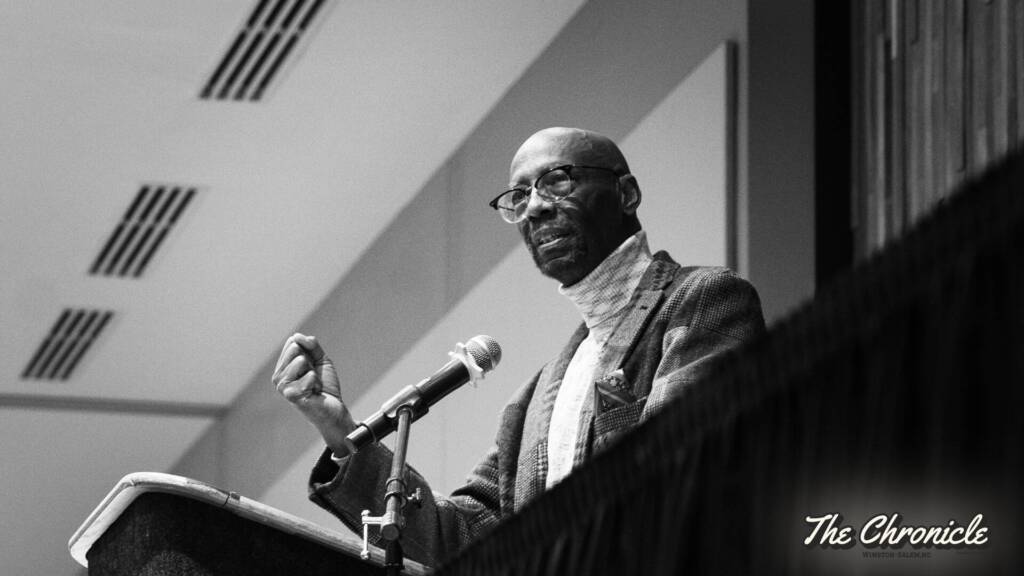
The keynote address by Dr. Larry D. Little challenged attendees to confront uncomfortable truths about progress and power. Rather than accepting surface-level narratives, the message urged the community to trust lived experience over misinformation and to demand policies that produce measurable benefits for everyday residents—not simply political longevity for those in office.
While acknowledging the historic significance of a majority African American City Council, the address pressed attendees to wrestle with a deeper question: how that representation has translated into improved conditions for those most marginalized—the least resourced, the overlooked, and those too often left out of decision-making. The challenge was not framed as a condemnation of individual leaders, but as a call for the community to hold its leadership accountable with clarity, persistence, and purpose.
Central to the message was a warning against complacency and internal division. The breakfast emphasized that ego, personality conflicts, and symbolic victories can distract from the work required to improve housing stability, economic access, public safety, and opportunity for Black residents across Winston-Salem.
Throughout the morning, speakers reinforced the idea that Dr. King’s legacy is not preserved through annual observances alone, but through sustained pressure, informed engagement, and moral courage from the community itself. The program closed with a charge to carry the breakfast’s spirit beyond the room and into neighborhoods, council chambers, classrooms, and congregations.
Support for the event came from a wide range of civic, educational, health care, and advocacy organizations, underscoring the breadth of investment in Winston-Salem’s future, as outlined in the sponsor listing .
As attendees departed, the central message lingered: celebration without accountability is incomplete, and progress without impact is not enough. The 2026 MLK Prayer Breakfast served as both remembrance and reckoning—calling Winston-Salem to align representation with results and faith with action.