







City, county outline progress — and growing gaps — in Winston-Salem’s homeless response
Staff Report
The Winston-Salem Chronicle
Winston-Salem officials say expanded shelter operations, stronger city-county coordination, and a revamped intake system have helped stabilize hundreds of people experiencing homelessness — but warned City Council members this week that staffing shortages, limited interim housing, and a lack of affordable units continue to strain the system.
During a Homeless Initiative Update presented to the City Council’s Meeting of the Whole, staff from the City’s Neighborhood Services Department detailed what has been accomplished so far — and what remains unmet — as homelessness continues to affect families, single adults, and unsheltered residents across the city.
City officials reported that since early January, winter overflow shelters alone have served 242 people, including 75 women and 167 men, through a mix of pop-up warming spaces and partner-run facilities. Several of those shelters were funded through federal Community Development Block Grant CARES Act dollars, while others relied on nonprofit or faith-based support, according to the presentation.
City–county partnership expands
Staff highlighted increased collaboration between the City of Winston-Salem and Forsyth County, including $181,194 in local funding to support shelter operations and winter shelter services. County leaders now hold multiple seats on the Commission on Ending Homelessness, and county departments such as Public Health, Social Services, and Community and Economic Development are more closely involved in planning and service delivery.
That partnership has supported community-wide efforts like the annual Point-in-Time Count, Project Homeless Connect events, and discussions around creating a centralized day center or “one-stop shop” for people experiencing homelessness.
New coordinated entry system rolls out
Officials also outlined a major overhaul of the community’s Coordinated Entry System — the process that connects people experiencing homelessness to housing and services. The updated model allows residents to seek help in person, by phone, email, or online, and includes a new 24/7 call center operated by NC 211, with real-time access to the community’s Homeless Management Information System.
The changes are designed to reduce wait times, expand access to case management, and prioritize people who have experienced long-term homelessness. A “light-touch” assistance program is also intended to help residents resolve housing crises before they become chronic.
Training grows, but workforce struggles persist
While officials pointed to expanded training in best practices — including Housing First, trauma-informed care, and progressive engagement — they acknowledged serious workforce challenges.
A 2022 wage study found that 60% of front-line homelessness service workers earn below the local living wage, defined as roughly $35,000 a year, contributing to burnout and limited agency capacity. City staff told council members that without increased staffing and sustainable funding, even well-designed programs struggle to meet demand.
Housing remains the biggest gap
Despite expanded shelter options, officials emphasized that emergency shelter is only a short-term solution.
“It costs more to house a household than to provide emergency shelter,” the presentation noted, underscoring the need for more affordable and supportive housing options for residents earning below 80% of area median income.
Among the strategies under consideration:
- Master leasing, where a nonprofit or public agency leases entire buildings and subleases units to people experiencing homelessness, reducing barriers for landlords.
- Rehabilitating city-owned homes or viable properties slated for demolition, with rehab costs estimated around $75,000 per unit, and prioritizing sale to nonprofits for affordable housing development.
- Rehabbing multifamily or investment properties for permanent supportive housing, with case management provided through local agencies.
- Converting vacant commercial spaces, including hotels and warehouses, into mixed-income or supportive housing.
- Cottage home villages, which can be built more quickly than traditional apartment complexes and provide permanent housing in smaller-scale settings.
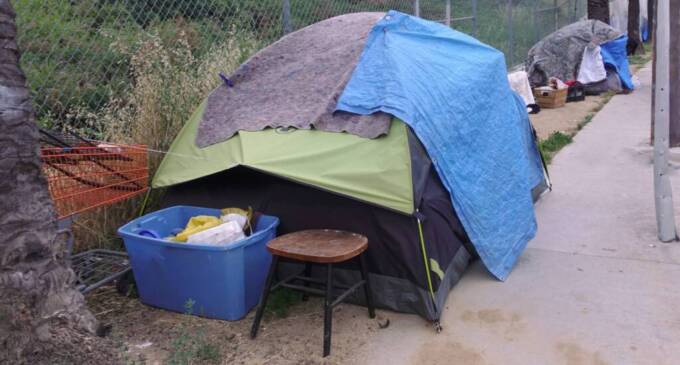
Officials also pointed to the need for street-level services — such as mobile showers, laundry, food access, and mental health care — to better serve people who remain unsheltered.
What happens next
City staff said many of the proposed housing strategies will require further policy direction, funding commitments, and council approval. Discussions around master leasing, property rehabilitation, and commercial conversions are expected to continue in upcoming committee meetings.
For Winston-Salem residents, particularly those in neighborhoods where homelessness is most visible, the update made clear that progress is real — but fragile.
As officials told council members, without sustained investment in housing, wages, and supportive services, the city risks managing homelessness rather than ending it.