






Historic Mars Hill Baptist Church to Benefit From Historic Resources Grant
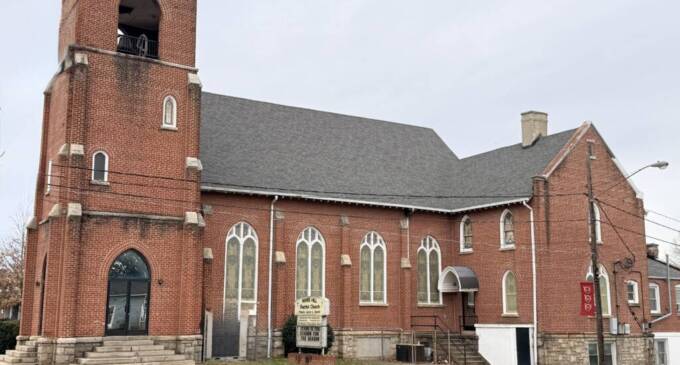
Mars Hill to Benefit From Historic Resources Grant City committee approves $75K federal grant to document East Winston’s urban renewal legacy and correct the historic record of a cornerstone Black church.
By Ava Leigh
The Winston-Salem Chronicle
Winston-Salem — Mars Hill Baptist Church, one of East Winston’s oldest and most historically significant Black congregations, will soon have its full Civil Rights–era legacy formally recognized. After decades of under-documentation, the church’s story is set to be corrected and expanded through a newly approved $75,000 federal preservation grant.
More than a landmark, Mars Hill has long been an anchor of spiritual, cultural, and civic life for African-American families in East Winston. Founded by Black residents during segregation, the church served as a sanctuary where worship intertwined with education, mutual aid, and community organizing. It remained a stabilizing force through waves of migration, economic shifts, and the upheaval of urban renewal.
During the Civil Rights Movement, Mars Hill functioned as a meeting place and organizing center—part of a larger tradition in which Black churches across the South became hubs for marches, voter registration drives, boycotts, and advocacy. Yet much of this social history was not reflected in the congregation’s 1999 National Register of Historic Places nomination, which focused largely on architecture and omitted its deeper cultural and political significance.
Now, the city aims to correct that gap.
On Monday, the Winston-Salem Finance Committee unanimously approved acceptance of a National Park Service Underrepresented Communities Grant, which will fund two key efforts: a comprehensive survey of the East Winston Urban Renewal Area and an amendment to Mars Hill’s National Register documentation.
Historic Resources Officer Michelle McCullough told committee members that the last major survey of African-American historic resources in the East and Northeast Wards took place in the late 1970s and early 1980s. The new project will examine the original boundaries of the East Winston General Neighborhood Renewal Plan, which dramatically reshaped the community between the 1950s and 1970s.
Entire blocks were bulldozed under federal urban renewal, displacing families and threatening long-standing institutions. Mars Hill survived—but its endurance, its losses, and its leadership during that era were never fully recorded.
“The amendment is essential to capturing Mars Hill’s full role in the Civil Rights era and urban renewal,”McCullough said. “It’s time for the record to reflect the church’s true history.”
Council Member Scippio, who represents the area, said documenting these stories is urgent.
She noted that urban renewal failed to deliver many of the improvements residents were promised. “Some of the neighborhoods most impacted are now the highest-poverty census tracts in the city,” Scippio said. With many elders who lived through displacement now in their eighties or older, she emphasized that the city is “running out of time” to preserve firsthand testimony.
Scippio voiced strong support for documenting the experiences of residents whose lives were reshaped by the bulldozer. “We need to capture the truth of what happened—while the people who lived it are still here to tell it,” she said.
Under the grant’s terms, the city must hire a consultant to complete a new historic resources survey and prepare an amended National Register nomination for Mars Hill. All work must be completed within two years.
City officials say the project will strengthen future preservation efforts, expand access to funding, and help ensure that East Winston’s cultural heritage is stewarded accurately for generations to come.
For many longtime residents, correcting Mars Hill’s record is not only about history—it is about dignity, memory, and making sure the narratives of Black institutions are honored in full.
As the city moves forward, Mars Hill’s story—shaped by resilience, faith, and community leadership—will finally take its rightful place in the public record.