





March 3 primary launches sweeping 2026 election cycle for Forsyth County, from U.S. Senate to school board
Staff Report
The Winston-Salem Chronicle
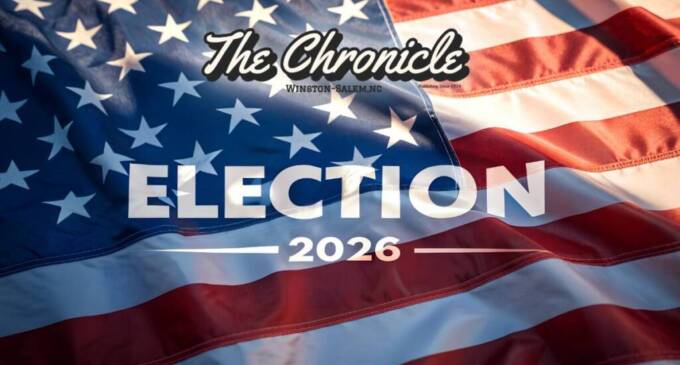
WINSTON-SALEM — Voters across Forsyth County will head to the polls on Tuesday, March 3, 2026, to begin deciding who will appear on the ballot in a far-reaching general election set for Nov. 3, 2026— a cycle that includes races for U.S. Senate, Congress, state courts, the General Assembly, county government, schools, and municipal offices.
Candidate filings released by the Forsyth County Board of Elections show crowded fields in many races, underscoring the stakes of a primary election that will shape policy and leadership affecting everyday life in Winston-Salem, East Winston, and communities countywide.
U.S. Senate (statewide)
North Carolina voters will choose nominees for a U.S. Senate seat in contested primaries:
• Democratic candidates:
Roy Cooper; Daryl Farrow; Marcus W. Williams; Orrick Quick; Justin E. Dues; Robert Colon
• Republican candidates:
Elizabeth A. Temple; Donald M. “Don” Brown Jr.; Michael Whatley; Margot Dupre; Thomas Johnson; Michele Morrow
• Libertarian candidate:
Shannon W. Bray
The race carries historic weight: North Carolina has not elected a Democratic U.S. senator since 2008, and the outcome could influence control of the U.S. Senate.
U.S. House of Representatives
Congressional District 6
• Democratic candidates: Cyril Jefferson; Keith Davenport; Beau Blair; Alysa Kassay
• Republican candidate: Addison McDowell
Congressional District 10
• Democratic candidates: Harry Morley Jr.; Ashley Bell; West Caudle; Marcus Pearson; Ralph Scott Jr.
• Republican candidates: Pat Harrigan; Matthew Sin
• Libertarian candidate: Steven Feldman
These districts include portions of Forsyth County and will help determine North Carolina’s voice in Washington on federal spending, infrastructure, and social policy.
State judicial races
Several statewide judicial offices will advance nominees from partisan primaries:
• N.C. Supreme Court, Associate Justice Seat 1
• Democrat: Anita Earls
• Republican: Sarah Stevens
• N.C. Court of Appeals, Seat 1
• Democrat: John S. Arrowood
• Republicans: Matt Smith; Michael C. Byrne
• N.C. Court of Appeals, Seat 2
• Democrat: Tobias “Toby” Hampson
• Republican: George Cooper Bell
• N.C. Court of Appeals, Seat 3
• Democrats: James Weldon Whalen; Christine Walczyk
• Republican: Craig Collins
Judicial races often receive less attention but shape rulings on voting rights, education law, and criminal justice.
North Carolina General Assembly
N.C. Senate
• District 31:
• Democrat: Andy Bowline
• Republican: Dana Caudill Jones
• District 32:
• Democrats: Paul Lowe Jr.; Gardenia Henley
• Republican: Peter Antinozzi
N.C. House
• District 71: Democrat Kanika Brown
• District 72: Democrat Amber Baker
• District 74: Democrat Amy Taylor North; Republican Jeff Zenger
• District 75: Democrat Jen Wiles; Republican Donny C. Lambeth
• District 91: Democrat Lucille Puckett; Republican Kyle Hall
These lawmakers will decide state budgets, school funding, and local authority — issues with deep implications for Forsyth County.
Local courts and public safety
• District Attorney, District 31:
• Democrat: Amara M. Hunter
• Republican: Jim O’Neill
• Forsyth County Sheriff:
• Democrat: Bobby F. Kimbrough Jr.
• Republican: Ernie Leyba
• Clerk of Superior Court:
• Democrat: Kevin Edwards
District Court Judge races divided by seat
Voters will also choose judges for North Carolina District Court, District 31, which serves Forsyth County. These seats handle high-volume matters such as traffic cases, family court, misdemeanor criminal cases, and small civil disputes — often the most direct interaction residents have with the judicial system.
District Court Judge, District 31 — Seat 1
• Democrat: Valene K. McMasters
District Court Judge, District 31 — Seat 2
• Democrat: Fred Adams
District Court Judge, District 31 — Seat 3
• Republican: Theodore “Ted” Kazakos
District Court Judge, District 31 — Seat 4
• Democrats:
Cheryl Andrews McDonald
Lauren A. Tuttle
Judicial races advance through partisan primaries, though judges serve in nonpartisan roles once elected.
Forsyth County government
Board of Commissioners (At-Large)
• Democrats: Dan Besse; Quamekia Shavers
• Republicans: Terri Mrazek; Mike Barresi Sr.
District A
• Democrats: Tonya McDaniel; Kimberly Hinton-Robinson; Mali “Shai” Woodbury; Natasha Smith
• Republican: Contessa Smith
District B
• Democrats: Adam Hill; Marsie West
• Republican: Chris Parker
Forsyth County Board of Education :
Education governance will be a major focus of the 2026 election, with crowded contests for both at-large and district-based seats on the Forsyth County Board of Education. These races come as Winston-Salem/Forsyth County Schools continues to navigate student achievement gaps, funding pressures, and school facility needs.
Board of Education — At-Large
Democratic candidates
• Valerie Brockenbrough
• Gwendolyn Johnson
• Richard Watts Jr.
• Henry McCarthy
• Frank M. James IV
• Vondell M. Davis
• Elisabeth Motsinger
• Linda Winikoff
• Ronda Mays
• Donald Dunn
Republican candidates
• Michael Quinones
• Jason Lucero
At-large members represent the entire county and play a key role in setting system-wide priorities and budgets.
Board of Education — District 1
Democratic candidates
• Chenita Barber Johnson
• Howard Claggett
• Trevonia “BG” Brown-Gaither
• Tremona C. Purvis
• Alex B. Bohannon
• Daryl Napper
Republican candidate
• Mike Klinetobe
District 1 includes much of East Winston, an area with deep historical ties to public education advocacy and equity concerns.
Board of Education — District 2
Democratic candidates
• Steve Folmar
• Curtis Fentress
• Stephanie Milat
• Emma Norton
• Susan Conway
• Marie Jackson
• Adam Corey
• Lee Childress
Republican candidates
• Susan Miller
• Zachary Hubbard
• Robert Barr Jr.
• Jill Nelson Berlin
• Tracy Lesser
• Derrick G. Hinson
• Steve Wood
• Allen Daniel III
• Robert “Bob” Weiss
• James Williams
District 2 covers parts of western and northern Forsyth County, including suburban and rural communities.
Municipal races
In Rural Hall, voters will choose:
• Mayor: Republican Terry M. Bennett
• Town Council: Democrat Amanda Johnson-Anthony; Republican Mark Lane
Historical context and what’s next
Midterm election cycles in North Carolina have historically produced lower turnout than presidential years, yet they have often driven major policy shifts — particularly in education funding, judicial balance, and local governance. In Forsyth County, recent cycles have shown that primaries frequently decide outcomes in heavily Democratic or Republican districts.
Following the March 3 primary, winning candidates will advance to the Nov. 3, 2026 general election, with a possible second primary on May 12 if required by law.
For Forsyth County voters, the message is clear: the decisions made in March may be just as consequential as those made in November.