







Food Bank Leaders Call on NC Lawmakers to Address Rising Hunger, Restore Funding
Staff Report
The Winston-Salem Chronicle
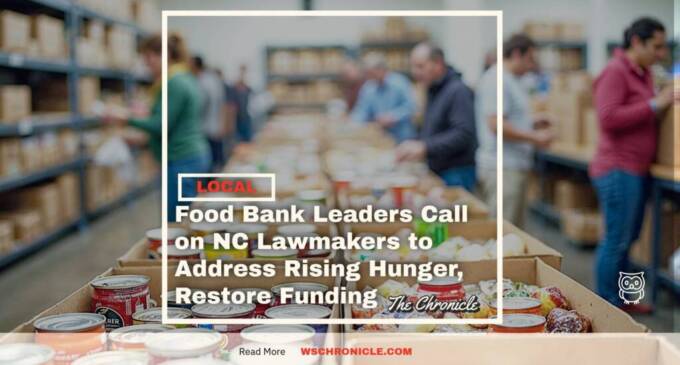
RALEIGH — Hunger relief leaders from across North Carolina are urging state lawmakers to restore critical food assistance funding as food banks across the state report growing demand from families struggling with rising living costs.
Representatives from food banks statewide planned to gather at the North Carolina General Assembly on Tuesday, May 12, calling on lawmakers to renew funding that helps food banks purchase fresh food from local farmers and strengthen the state’s emergency food response network.
According to hunger relief leaders, more than 1.6 million North Carolinians are currently facing food insecurity as inflation and rising costs for groceries, housing and fuel continue to strain household budgets. Food banks across the state say they have seen demand increase by 30% or more compared to last year.
Feeding the Carolinas and member food banks say the need has been especially severe in communities still recovering from Hurricane Helene, where some local pantries and meal distribution sites have reported record numbers of people seeking assistance in recent months.
“The price of food is rising, and so is hunger. The time to act is now,” said Eric Aft, CEO of Second Harvest Food Bank of Northwest NC and chair of the Feeding the Carolinas Board of Directors. “We are seeing more working families than ever before turn to food banks for help, and we need the state’s partnership to ensure no one goes hungry — especially during times of crisis.”
Federal data from the U.S. Department of Agriculture shows that one in seven North Carolinians lives in a food-insecure household, including one in five children.
Hunger relief advocates warn the problem could worsen in the coming months due to economic pressures and anticipated federal policy changes affecting nutrition assistance programs.
Among the concerns raised by food bank leaders are proposed changes to the Supplemental Nutrition Assistance Program, commonly known as SNAP, through the One Big Beautiful Bill Act. SNAP currently helps approximately 1.4 million North Carolinians purchase food each month, according to advocates, with children living in 43% of participating households.
Food bank leaders stressed that charitable organizations cannot replace the scale of federal nutrition assistance.
“For every one meal provided by food banks, SNAP provides nine,” leaders said in a statement. “As SNAP access decreases, more families will turn to already strained food banks and local pantries for support.”
Advocates also pointed to the impact of recent economic disruptions, including last fall’s federal government shutdown, which created financial hardship for thousands of federal employees, military families and contractors across North Carolina.
Despite the increasing demand, food bank leaders say state funding that historically helped support the purchase of fresh food from local farms has not yet been renewed amid ongoing state budget negotiations.
“We cannot do it alone,” said Ann Edmondson, executive director of Feeding the Carolinas. “Restoring this funding is essential to ensuring that in times of crisis or disaster, our state is prepared and our neighbors are cared for.”
Food bank leaders are encouraging residents to contact lawmakers in support of restoring funding for food purchasing programs and strengthening North Carolina’s food assistance network.